


 Contact Us


- Care
- Perform
- Exceed
- Streamline
- Serve
Shocks and Strut Suspension Services in North Olmsted, Ohio
Shocks and Struts
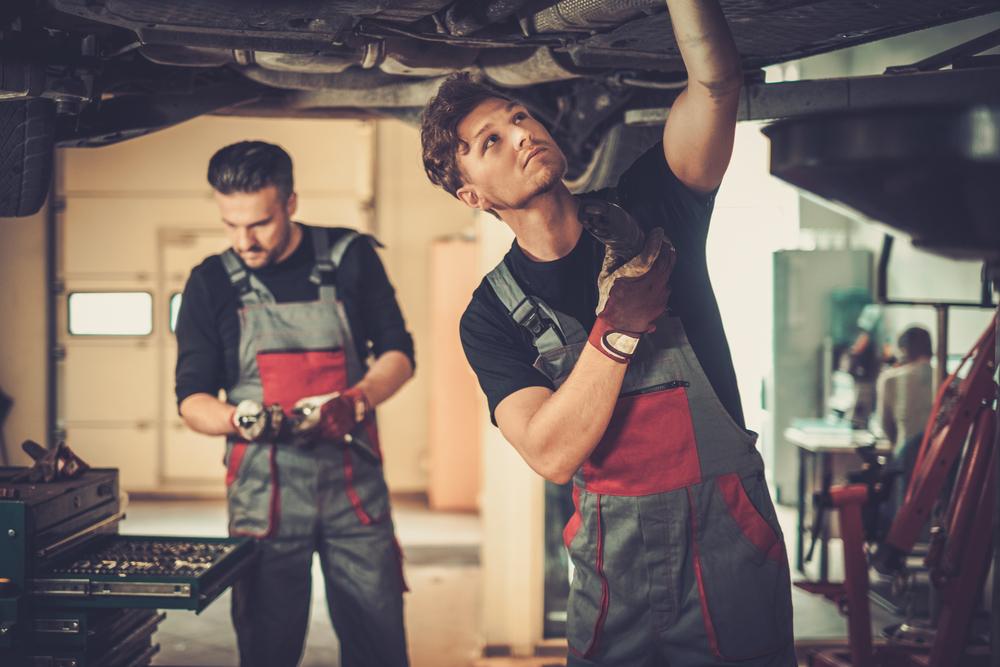
Shocks and struts are a critical component of the suspension system in your vehicle.
Struts
Struts were introduced in the 70s and 80s to make the suspension system more efficient with fewer components on front-wheel drive vehicles.
Shocks
Shocks are typically used on rear-wheel-drive vehicles and on the rear of front-wheel drive vehicles.
Both shocks and struts are designed to help keep your vehicle on the road with as much contact as possible. Your tires cannot stop, accelerate, or turn the car if they are not in contact with the road.
Services and Maintenance for Shocks and Struts
At Weber Automotive, we always check your shocks and struts as part of our routine maintenance check whenever you come in for an oil change or something of that nature. We look at them for oil leakage or wear.
They don't have maintenance intervals so you can't really gauge when to get new shocks and struts just by distance, it is all dependent on how you drive. That is why it is important to have them looked at when you go into the auto repair shop.
If shocks and struts are neglected, it could lead to:
-
Poor handling
-
Compromised safety
-
Increases stopping distance
-
Uneven tire wear
If you feel your vehicle is a little too bouncy or it is hard to stop, accelerate, and turn, then you might need new shocks or struts. Contact us at Weber Automotive today with any questions or to schedule an appointment for your car today!
Hunting Electrical Gremlins: How We Track Down Intermittent Car Electrical Problems
Posted By Weber
October 14, 2026
Category: General
You grab your keys, head out the door, and your car is stone dead. Last week it was fine. This morning, nothing. Then, just to keep it interesting, it starts perfectly tomorrow. That is the classic electrical gremlin, and it is exactly the kind of mystery our team loves to solve at Weber Automotive. What We Mean by Electrical Gremlins Modern vehicles are rolling computers. When something electrical acts up, it can look like lights that flicker, warning lamps that come and go, accessories that work sometimes, or a battery going dead for no obvious reason. Intermittent issues are especially frustrating because they are hard to reproduce on command. You might only see the problem once a month, under who knows what conditions. Why Intermittent Issues Are So Tricky If a fault is constant, we can measure it immediately. When it shows up rarely, we have to be detectives. That is where our experience, process, and persistence matter. We gather every clue we can, even the ones that seem unrelated at first glance. When did it happen? What was the weather like? Did it sit outside or in a garage? Were any accessories left on? Did anything unusual happen just before or after? Those answers point us toward likely causes so we can reproduce the conditions and catch the fault in the act. A Real Case We Solved A customer came in with a battery that would mysteriously die about once a month. The battery tested great. Charging system was fine. So we started with questions. One detai
Where We Find the Right Parts To Fix Your Car Faster and Back Them With a Better Warranty
Posted By Weber
October 14, 2026
Category: General
Picture this. Your car is stuck in a dealership lot for weeks, all because one part is backordered. Meanwhile, you still need to get to work, get the kids to practice, and keep life moving. We see it every day, and we built our approach to parts sourcing so you do not have to wait. At Weber Automotive, our job is to fix your car right, fix it fast, and stand behind the work. Parts availability has changed since the COVID-19 era, and delays are still common. The advantage of choosing us over a single-source dealership is simple. We are free to find the right part from the right place, which means more options, faster turnaround, and a stronger warranty. Why Parts Availability Is Still a Challenge Supply chains never fully returned to the old normal. Certain components can be tough to find through a single channel, which is why dealership lots often fill with vehicles waiting for weeks or even months. When you only have one source, you wait. When you can go anywhere, you move. How We Source Parts To Keep You Moving We are not limited to one shelf in one building. We tap into multiple channels to get you back on the road quickly and confidently. Dealer sourcing when it is the best solution Original equipment parts from non-dealer distributors that stock factory components High quality aftermarket parts from trusted warehouses Used parts in rare cases when nothing else is available or practical This flexibility lets us solve availability problems and tailor each repair
Cleveland Car AC Blows Warm at a Stop? Our Expert Fix at Weber Automotive
Posted By Weber
April 21, 2026
Category: General
You are crawling through Cleveland traffic on a July afternoon. The sun hits your windshield, the cabin heats up, and just when you need relief most, your AC turns lukewarm at the red light. Then it cools again once you are moving. Frustrating and all too common. Here is the good news. We diagnose and fix this exact problem every summer at Weber Automotive. I am Bryan Weber, and our team has a simple way to explain what is happening and how to get your cool air back. Why Cold Air Turns Warm at Idle Your air conditioning relies on airflow through the condenser, which sits at the front of your vehicle. While you are moving, natural airflow cools the condenser and helps produce cold air. When you stop, the system depends on an electric cooling fan to keep that air moving. If the fan does not run at idle: Airflow across the condenser drops Pressure in the AC system climbs The vents start blowing warm air In some cases, the engine temperature can also creep up This is one of the biggest reasons AC feels cold while you are driving but warm at a stop. A Quick DIY Check You Can Do Safely If you are comfortable taking a quick look, try this: Park safely, set the parking brake, and pop the hood. Start the engine and turn the AC to max. Use a flashlight to look toward the radiator area. Keep hands and tools clear of moving parts. The electric cooling fan should start running with the AC on. You should see it spin, hear it, and feel airflow. If the fan does not run and yo
Weber Automotive
28820 Lorain Rd
North Olmsted, OH 44070
Hours of Operation
Monday-Thursday: 8am-5:30pm
Friday: 8am-5pm
Ready to Get Started?
Schedule your service appointment today and experience the Weber Automotive difference.
